Across the Atlantic: A Nine-Year-Old's Bottled Note Arrives in Ireland
A boy in Cape Cod tossed a bottle into the surf in 2024 with a note and his grandmother's address. Eighteen months later, a fisherman in County Clare found it intact and wrote back.

The bottle entered the Atlantic Ocean on a Tuesday afternoon in September of 2024. It was a clear glass juice bottle, the kind sold at a grocery store in Hyannis, with a screw cap that the boy who threw it had reinforced with a wide strip of black electrical tape.
The boy was nine. His name was Henry Whitcomb, and he was visiting his grandmother for the last week of summer vacation at her cottage on Cape Cod. He had read a book that summer about a boy who threw a bottle into the sea and received a letter back from a girl in Norway. He had decided to try it himself.
His note, written in pencil on a folded piece of lined paper, was four sentences long.
My name is Henry. I am nine years old. I live in Massachusetts but right now I am at my grandmother's house. If you find this please write to her. She will know how to find me.
Below the note, in his grandmother's handwriting, was her name and her mailing address in Hyannis.
Henry's grandmother, a retired pediatrician named Eleanor Whitcomb, had agreed to the project on the condition that he include her address rather than his own. She had assumed nothing would come of it.
The bottle drifted north along the Gulf Stream. Where it went between September of 2024 and March of 2026 is impossible to know. Bottles released from Cape Cod have been found in Norway, France, the Azores, and Ireland in past studies of ocean drift. Most are never recovered at all.
This one was recovered by a fisherman named Cillian O'Donoghue on the morning of March 14, 2026, on a beach in Lahinch, County Clare, on the west coast of Ireland.
O'Donoghue was fifty-eight. He had walked the same stretch of beach most mornings for thirty-one years, partly for the air and partly because his dog, an old collie named Maeve, refused to go anywhere else. He had found things on that beach before. A fishing float from a Portuguese trawler. A child's plastic shovel. A waterlogged paperback novel.
The bottle was wedged between two stones near the high-tide line. The tape on the cap had partially peeled but was still mostly intact. The paper inside was visible through the glass.
The bottle was wedged between two stones near the high-tide line. The tape on the cap had partially peeled but was still mostly intact. The paper inside was visible through the glass.
O'Donoghue brought the bottle home and opened it in his kitchen. The paper was damp at the edges but the writing was legible.
He read the note twice. Then he sat down at his kitchen table and wrote a letter to Eleanor Whitcomb in Hyannis, Massachusetts.
His letter, three pages long, described where the bottle had been found, the weather that morning, and the dog who had walked him to the spot. He included his own address and a photograph of the bottle, the note, and Maeve, sitting on the kitchen floor looking unimpressed.
He mailed the letter on a Monday. It arrived in Hyannis eleven days later.
Eleanor Whitcomb was eighty-one. She opened the envelope at her kitchen table, read the letter twice, and then called her daughter, who was Henry's mother.
Henry was eleven now. He was in the sixth grade. He had forgotten about the bottle.
His mother drove him to his grandmother's house the following Saturday. Eleanor showed him the letter. She showed him the photograph of the bottle on Cillian O'Donoghue's kitchen floor. She showed him the small map he had drawn at the bottom of the third page, indicating the beach in Lahinch where the bottle had come ashore.
Henry read the letter twice, the way O'Donoghue had read his own note. Then he sat down at his grandmother's kitchen table and wrote a reply.
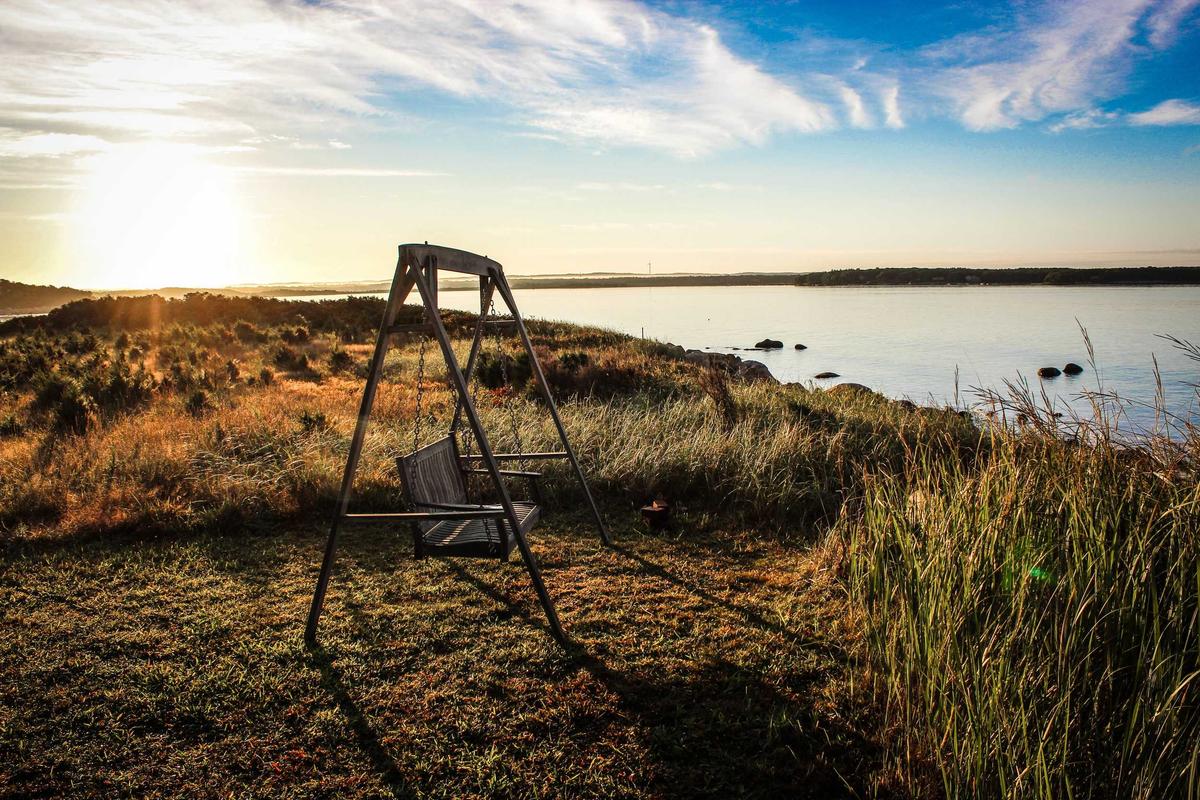
His reply was longer than his original note. He was eleven now, after all. He wrote about school, about a science fair project he was planning on ocean currents, about the dog he wished his parents would let him have. He asked Maeve's age. He asked whether Lahinch had cliffs. He asked whether the water there was cold.
Eleanor mailed the letter the following Monday.
O'Donoghue received it in early April. He wrote back within a week. Maeve was twelve, he wrote, and gray around the muzzle, and not the dog she had been at six but still the dog she had always been. Lahinch did have cliffs, the Cliffs of Moher being a short drive to the north. The water was very cold. He had been swimming in it most of his life.
The correspondence continued. By the end of April, four letters had crossed the Atlantic. By the end of May, eight. Henry began saving every reply in a shoebox under his bed. O'Donoghue began saving Henry's letters in a kitchen drawer, beside the photographs of his own grandchildren.
The story reached a local newspaper in Clare in mid-May, after O'Donoghue mentioned the bottle to a regular at the pub. The article was picked up by an Irish national paper and then by a wire service. A reporter from a Boston television station called Eleanor Whitcomb to confirm the story.
Eleanor agreed to a short interview on the condition that her grandson not be filmed. She read O'Donoghue's first letter aloud on camera. She held up the bottle, which O'Donoghue had returned to her by post along with the original note.
The Whitcomb family has begun planning a trip to Ireland for the summer of 2027. Henry's mother has been saving for it since April. Henry has been studying maps of County Clare. O'Donoghue has offered to drive them along the coast and to introduce Henry to Maeve, if Maeve is still living.
O'Donoghue told the Irish reporter that he had spent thirty-one years walking the same beach without expecting to find anything that mattered. He had begun to think the beach had nothing left to offer him. He had been wrong.
Henry told his grandmother that he wanted to throw another bottle into the ocean before the summer ended. Eleanor said she would help him write the note.
This time, she told him, he could include his own address.
Filed under
Written by
Marcus Bell
Marcus Bell writes for The Shoreline on stories worth sitting with.
The Reader Mail
Receive each new issue.
A weekly letter with the new pieces, an editor's note, and one quiet recommendation. No advertising. Unsubscribe at any time.
We send roughly one letter a week. We do not share the list with anyone.
More in Reunions
Keep reading

Reunions
The Diary in the Attic: A 1942 Journal Finds Its Way to Its Author's Granddaughter
Lila Renshaw · 5 min read
Reunions
The Quilt at the Thrift Store: A Stolen Heirloom Returns to Its Family
Priya Mehta · 5 min read

Reunions
Thirty Frames of Strangers: A Found Camera Returns a Family to Its Past
Owen Tate · 5 min read