Letters to the Future: A Vermont Time Capsule Opened After Fifty Years
In 1976, the children of Hartland, Vermont, buried a steel box behind the elementary school. Half a century later, the town gathered to read what they had left for themselves.
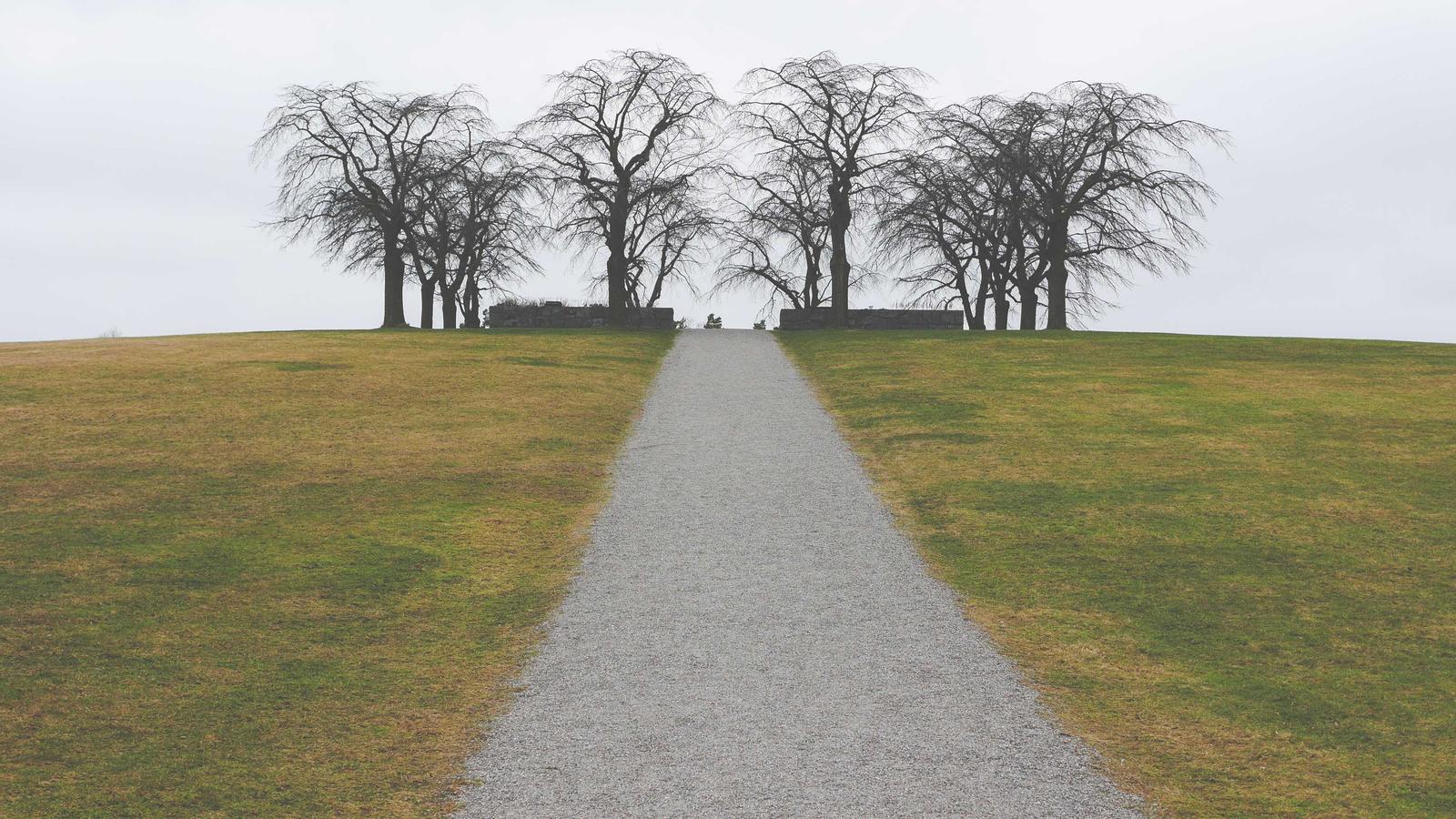
The town of Hartland, Vermont, has a population of just under thirty-four hundred people. It has one elementary school, one general store, and a green where the high school band plays on summer evenings. In the spring of 1976, as part of the United States Bicentennial, every child in the elementary school was asked to write a letter to the future.
The letters were sealed in a steel box, along with a copy of the local newspaper, a Polaroid of the school's third-grade class, a cassette tape of a town meeting, and a single can of Coca-Cola. The box was buried three feet deep behind the school, under a plaque that read To Be Opened May 2, 2026.
The town remembered.
More than four hundred people gathered behind the school on a clear Saturday afternoon in May. Folding chairs had been set up on the grass. A small stage held a microphone and a podium. The plaque had been polished. A backhoe operator named Wendell Croft, whose own letter was somewhere in the box, did the digging himself.
The box came out at about three in the afternoon. It was rusted on the outside but intact. The town clerk, a woman named Hannah Pierce, opened it on stage with a pair of bolt cutters and a screwdriver.
The smell, several attendees noted, was the smell of an old library.
The letters had been written on lined notebook paper, folded once, and labeled with each child's name and age. There were one hundred and forty-three of them. The school had arranged for descendants and former students to be present whenever possible. About eighty of the original letter writers were still living. Forty-one were in the audience.
Hannah Pierce read the letters aloud, one at a time, calling each former student to the stage as their letter was opened.
Hannah Pierce read the letters aloud, one at a time, calling each former student to the stage as their letter was opened.
The first letter belonged to a man named Carl Underhill, who had been eight years old in 1976 and was now fifty-eight, a dairy farmer with a graying beard and a bad knee. His letter, written in pencil, read in full.
Dear future Carl. I hope you are still alive. I hope you have a tractor. I want to be a farmer when I grow up. Do not forget me.
Carl read his own letter at the podium, and the audience laughed and cried in the same breath. He did have a tractor, he told the crowd. He had three. He had not forgotten.
A woman named Linda Eberhardt, who had been ten in 1976 and was now sixty, had written a letter to her future husband, whoever he might turn out to be. She had asked him to be kind to her mother. Her husband of thirty-four years, a retired postman named Greg, stood in the front row holding her hand while she read.
Some letters were harder. A boy named Tommy Greaves had written about wanting to play professional baseball. He had died in a car accident in 1989 at the age of twenty-three. His sister, Janet, read the letter for him. She held it in front of her face for a long moment before she began. When she finished, she folded it carefully and kept it.
An eight-year-old girl named Patricia O'Donnell had written that she hoped her parents would stop fighting. She was now fifty-eight, a marriage counselor in Burlington. Her parents had divorced in 1981 and both had since died. She read her own letter without commentary, but afterward, on stage, she told the crowd that the work she did for a living had begun with that letter, and that she had not known it until that afternoon.

A boy named David Chen had written in 1976 that he wanted to be the first Chinese American president. He had not become president. He had become a cardiologist in Boston, and he was the only original letter writer who had flown in from out of state for the ceremony. He read his letter with his two adult children standing behind him. The crowd applauded for a long time.
Not every letter was read aloud. Some attendees asked to read theirs privately, and Hannah Pierce honored every request. A few letters belonged to people who had moved away and could not be located. Those were placed in a separate folder, to be archived at the town library and made available if the writers ever returned.
The cassette tape was played through a borrowed boombox. The voices on it included the town selectmen of 1976, a high school principal named Mr. Bartholomew who had died in 1994, and a brief speech by a fourth-grade teacher named Mrs. Wendell who, at ninety-one, was sitting in the front row in a wheelchair. She listened to her own voice from fifty years earlier without changing expression. When the recording ended, she said, in a voice clear enough to reach the back of the crowd, that she had sounded younger than she remembered.
The can of Coca-Cola was unopened and, by the consensus of the town's chemistry teacher, not safe to drink. It was donated to the historical society.
The Polaroid of the third-grade class was passed through the audience. Several faces in the photograph were identified, named, and located in the crowd. Three of the children pictured had died. Their names were spoken aloud, one at a time, and the audience stood for them.
At the end of the ceremony, Hannah Pierce announced that a new time capsule would be buried that summer. Every child in the elementary school had already begun writing letters. The capsule would be opened in May of 2076.
Wendell Croft, the backhoe operator, told a local reporter that he would not be present for the next opening. He would be one hundred and twenty-two years old. But his granddaughter, who was six, was already drafting her letter. She had asked him how to spell tractor.
The town has begun planning the next fifty years.
Filed under
Written by
Marcus Bell
Marcus Bell writes for The Shoreline on stories worth sitting with.
The Reader Mail
Receive each new issue.
A weekly letter with the new pieces, an editor's note, and one quiet recommendation. No advertising. Unsubscribe at any time.
We send roughly one letter a week. We do not share the list with anyone.
More in Reunions
Keep reading

Reunions
Across the Atlantic: A Nine-Year-Old's Bottled Note Arrives in Ireland
Marcus Bell · 5 min read

Reunions
The Diary in the Attic: A 1942 Journal Finds Its Way to Its Author's Granddaughter
Lila Renshaw · 5 min read
Reunions
The Quilt at the Thrift Store: A Stolen Heirloom Returns to Its Family
Priya Mehta · 5 min read